
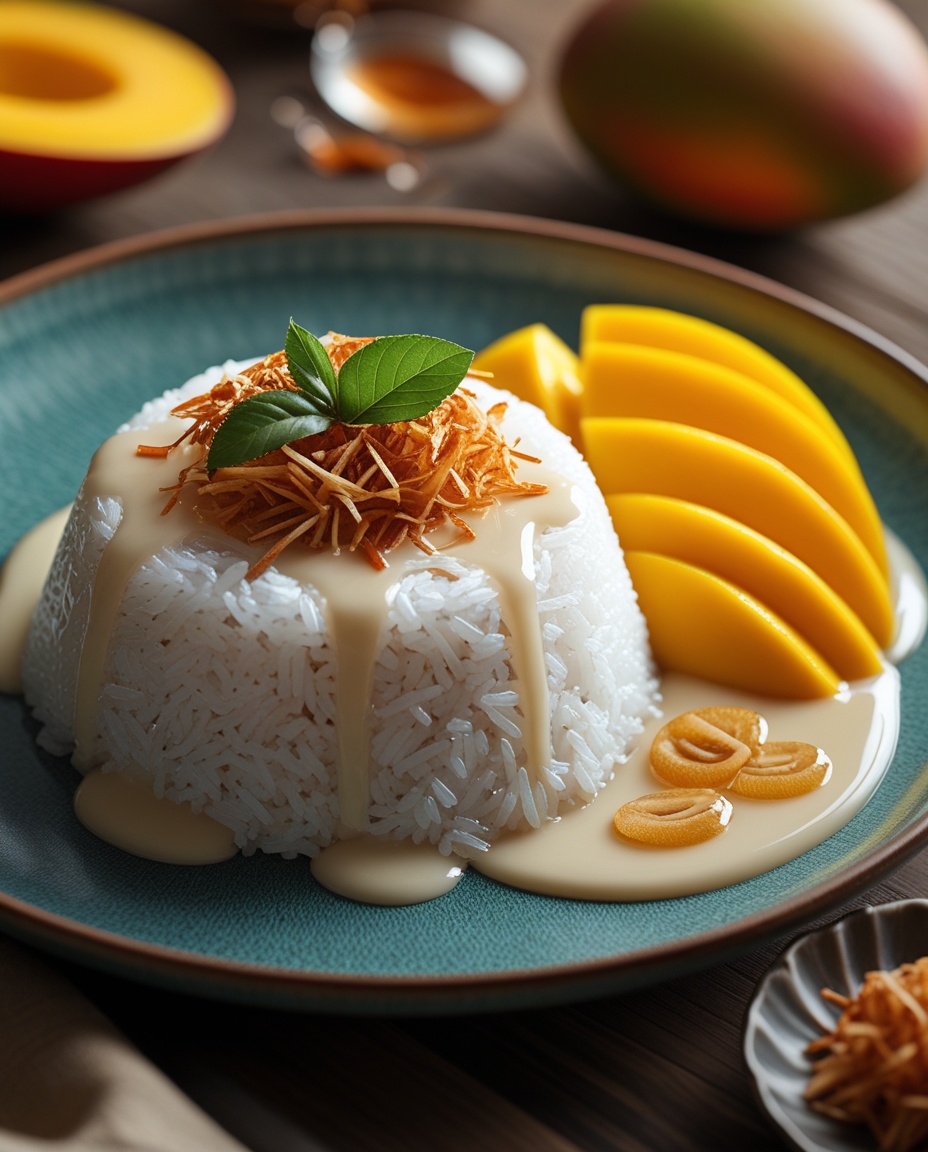
Learn how to make authentic Thai Mango Sticky Rice with sweet coconut-infused sticky rice and fresh ripe mango. A classic Thai dessert that’s easy to make at home.
Authentic Thai Mango Sticky Rice
Thai Mango Sticky Rice, known locally as Khao Niew Mamuang, is one of Thailand’s most famous and beloved desserts. This simple yet elegant dish combines sweet coconut sticky rice with juicy ripe mango slices, creating a perfect balance of creamy, sweet, and refreshing flavors.
Popular throughout Thailand, especially during mango season, this dessert is a staple at street food markets, restaurants, and family celebrations. With just a few ingredients, you can recreate this authentic Thai favorite right in your own kitchen.
Why You’ll Love This Recipe
- Authentic Thai flavor
- Naturally gluten-free
- Rich coconut aroma
- Perfectly sweet and refreshing
- Easy to make with simple ingredients
- Ideal for summer gatherings and special occasions
Ingredients
For the Sticky Rice
- 1½ cups Thai sticky rice (glutinous rice)
- Water for soaking and steaming
For the Coconut Sauce
- 1 cup full-fat coconut milk
- ⅓ cup granulated sugar
- ½ teaspoon salt
For Serving
- 2 ripe mangoes, peeled and sliced
- 2 tablespoons toasted sesame seeds or toasted mung beans (optional)
Instructions
Step 1: Soak the Rice
Rinse the sticky rice several times until the water runs clear.
Place the rice in a large bowl and cover with water.
Soak for at least 6 hours or overnight.
Step 2: Steam the Rice
Drain the soaked rice.
Place it in a steamer lined with cheesecloth.
Steam for 25–30 minutes until tender and translucent.
Step 3: Prepare the Coconut Sauce
While the rice is steaming, combine coconut milk, sugar, and salt in a saucepan.
Heat gently over medium-low heat until the sugar dissolves completely.
Do not allow the mixture to boil.
Reserve about ¼ cup of the coconut sauce for serving.
Step 4: Mix Rice and Coconut Sauce
Transfer the hot sticky rice to a large bowl.
Pour the remaining coconut sauce over the rice.
Stir gently until evenly combined.
Cover and let sit for 20–30 minutes to absorb the flavors.
Step 5: Assemble and Serve
Place a portion of sticky rice on a serving plate.
Arrange fresh mango slices beside the rice.
Drizzle with the reserved coconut sauce.
Sprinkle with toasted sesame seeds or mung beans if desired.
Serve warm or at room temperature.
What Makes Mango Sticky Rice Special?
The beauty of Mango Sticky Rice lies in its simplicity. The rich coconut-infused rice provides a creamy texture, while the fresh mango adds natural sweetness and a juicy contrast. Together, they create one of the most iconic dessert combinations in Thai cuisine.
Pro Tips
- Use authentic Thai sticky rice for the best texture.
- Choose ripe, sweet mangoes with vibrant color.
- Never boil the coconut milk.
- Allow the rice to fully absorb the coconut mixture.
- Serve shortly after assembling for the best presentation.
Common Mistakes to Avoid
- Using regular rice instead of sticky rice
- Skipping the soaking step
- Overcooking the coconut sauce
- Using underripe mangoes
- Not allowing the rice to absorb enough coconut milk
Serving Suggestions
This delicious Thai dessert pairs perfectly with:
- Thai iced tea
- Coconut ice cream
- Fresh tropical fruit
- Jasmine tea
- Coconut pudding
Frequently Asked Questions
What type of rice is used in Mango Sticky Rice?
Traditional Thai glutinous rice, often called sticky rice, is essential for authentic texture.
Can I make Mango Sticky Rice ahead of time?
Yes. Prepare the rice ahead and assemble with fresh mango just before serving.
Can I use canned mango?
Fresh ripe mangoes are highly recommended for the best flavor and texture.
Is Thai Mango Sticky Rice gluten-free?
Yes. The traditional recipe is naturally gluten-free.
Recipe Details
Prep Time: 15 minutes
Soaking Time: 6 hours
Cook Time: 30 minutes
Rest Time: 30 minutes
Total Time: 7 hours 15 minutes
Servings: 4
Cuisine: Thai
Course: Dessert
Nutrition Information (Per Serving)
- Calories: 420
- Carbohydrates: 72g
- Protein: 5g
- Fat: 14g
- Fiber: 3g
- Sugar: 28g